
Collision Center 1 Prior Lake is sharing consumer guidance explaining how paint preparation contributes to vehicle refinishing after collision-related body repairs. Located at 16111 Main Ave SE in Prior Lake, Minnesota, the auto body repair facility is highlighting the procedures used to prepare repaired surfaces before automotive paint and protective coatings are applied.
After a collision, restoring a vehicle's exterior often involves more than correcting dents or replacing damaged body panels. Repaired surfaces must be evaluated and prepared according to the materials involved and the refinishing products being used. Proper preparation helps support coating adhesion, surface consistency, and the appearance of the completed repair.
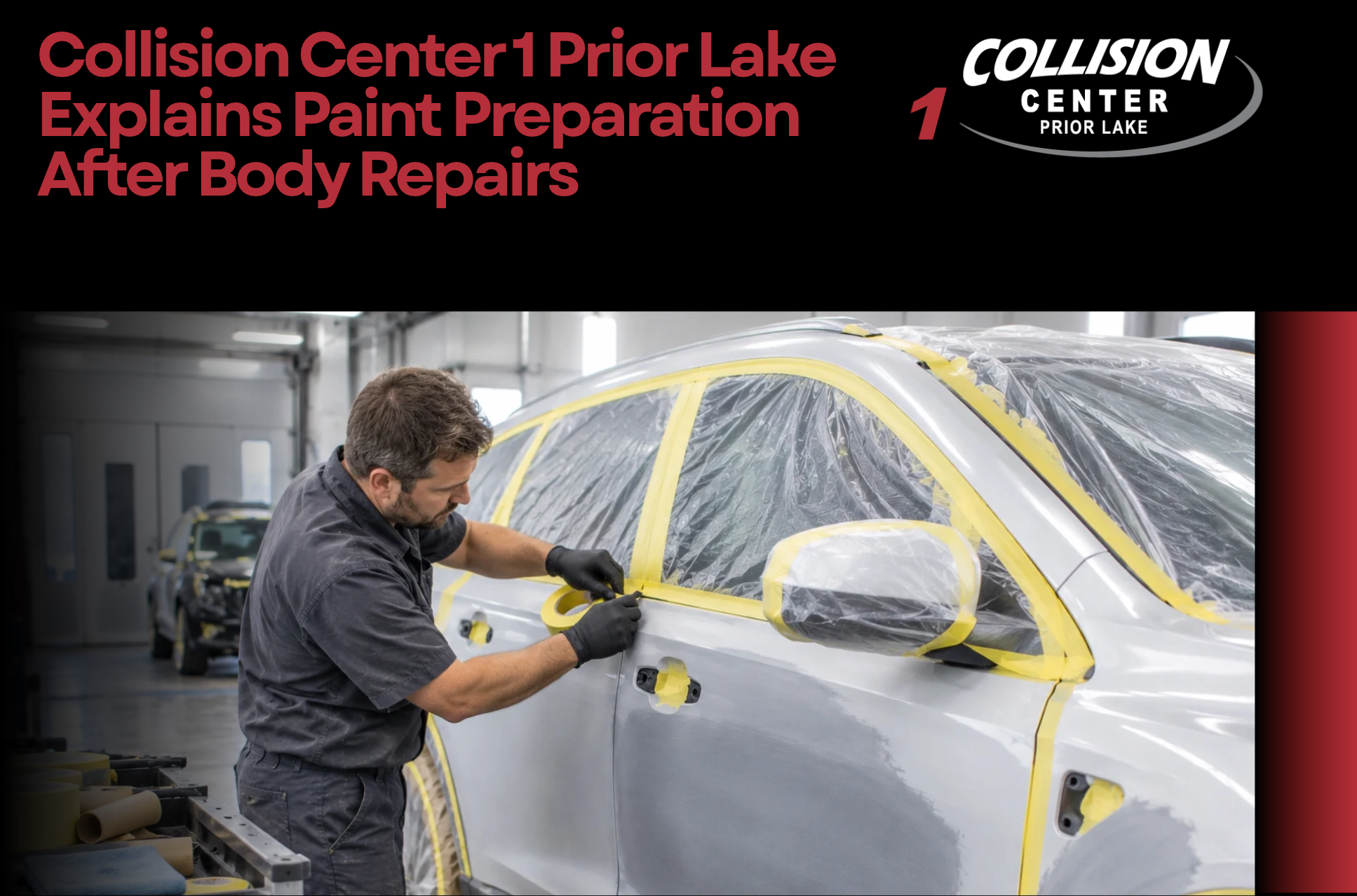
The November guidance outlines the main stages of paint preparation, including surface cleaning, sanding, primer application, and preparation for final refinishing. Each stage addresses conditions that can affect how automotive coatings bond to repaired surfaces.
Surface cleaning is an important early step in the refinishing process. Vehicle exteriors can accumulate dirt, road residue, oils, waxes, and other contaminants that may interfere with coating adhesion. Appropriate cleaning procedures help remove these materials before additional surface preparation begins.
Cleaning methods and products depend on the type of surface being prepared. Painted metal panels, aluminum components, and plastic exterior surfaces may require different preparation procedures. Following applicable product instructions helps reduce the risk of contamination during refinishing.
Collision Center 1 Prior Lake provides auto body repair services for vehicles affected by collision-related exterior damage. Depending on the repair, refinishing preparation may follow dent correction, body panel restoration, or replacement of damaged exterior components.
Sanding is another important part of preparing a repaired surface for paint. Technicians may use specified abrasives and sanding procedures to smooth repaired areas, prepare existing coatings, or create the surface profile required for subsequent materials. The appropriate method depends on the substrate and the refinishing system.
Different areas of a repaired vehicle may require different preparation methods. A previously painted panel may need surface preparation that differs from the process used on a new replacement component or an area where bare metal has been exposed. Applying the same procedure to every surface may not meet the requirements of the materials involved.
Surface imperfections can also become more noticeable after paint is applied. Scratches, uneven transitions, and other preparation defects may affect the appearance of the finished coating. Evaluating these conditions before refinishing helps identify areas requiring additional work.
Primer application is another consideration in the paint preparation process. Depending on the substrate and repair, specified primers may help provide corrosion protection, support adhesion, or create a suitable surface for subsequent coatings. Not every primer performs the same function, and product selection depends on the repair requirements.
Some repaired surfaces may require multiple preparation and coating stages before the final color is applied. These procedures can involve substrate treatment, primer application, curing, and additional surface preparation. Refinishing product specifications establish the appropriate sequence and conditions.
Collision Center 1 also provides collision repair services addressing damage that may involve exterior panels and underlying vehicle structures. When collision repairs disturb factory-applied coatings or expose metal surfaces, applicable corrosion protection requirements may need to be addressed during the repair and refinishing process.
Masking and protection of surrounding areas are additional parts of paint preparation. Depending on the refinishing operation, technicians may protect adjacent panels, glass, trim, and other surfaces from overspray or unintended coating application. Some repairs may require removal of components rather than masking, based on manufacturer and refinishing requirements.
Paint preparation also involves managing the working environment. Dust, airborne contaminants, and unsuitable application conditions can affect refinishing results. Appropriate workspace controls and adherence to coating product specifications help support consistent application.
For Prior Lake drivers, Minnesota's seasonal driving conditions can contribute to exterior contamination. Road salt, moisture, and winter debris may accumulate on vehicle surfaces, making cleaning and surface evaluation relevant before refinishing. These environmental factors do not change the need to follow the specified preparation procedures for the vehicle and coating system.
Once the repaired surface has been prepared, technicians can proceed with the applicable color and clearcoat operations. Depending on the vehicle's finish and repair location, color evaluation and blending may be necessary to achieve a consistent appearance. The final refinishing approach depends on the original coating, affected panels, and repair plan.
Paint preparation and paint application are related but distinct stages of exterior restoration. A consistent final finish depends partly on the condition of the underlying surface and the compatibility of the materials applied. Visual inspection of the completed repair can help identify finish irregularities, although appearance alone does not verify every preparation step.
The November guidance also explains that paint preparation requirements can influence repair timelines. Surface preparation, primer curing, and refinishing operations must follow applicable product specifications. Additional preparation may be necessary when previously concealed damage or surface defects are identified during repairs.
Not every collision repair requires complete refinishing of an entire vehicle panel or multiple adjacent panels. The necessary work depends on the location and extent of the damage, the existing finish, and applicable repair procedures. Professional assessment helps determine which surfaces require preparation and refinishing.
Collision Center 1 provides additional information about its local facility through the Prior Lake location page. The location serves drivers in Prior Lake and surrounding Minnesota communities with collision-related vehicle restoration needs.
The November consumer guidance emphasizes that paint preparation is a distinct and important part of professional auto body restoration. Cleaning, sanding, appropriate primer application, and protection of surrounding surfaces help establish the conditions needed for subsequent refinishing operations.
About Collision Center 1 Prior Lake
Collision Center 1 Prior Lake is an auto body and collision repair facility located at 16111 Main Ave SE, Prior Lake, MN 55372. The location provides auto body repair, collision repair, paint refinishing, and related vehicle restoration services for drivers in Prior Lake and surrounding Minnesota communities. As part of Collision Center 1, the facility addresses accident-related damage according to vehicle-specific assessments and applicable manufacturer repair procedures.
###
For more information about Collision Center 1 Prior Lake, contact the company here:
Collision Center 1 Prior Lake
Jerald Stiele
(952) 447-4259
layres@collisioncenter1.com
16111 Main Ave SE, Prior Lake, MN 55372
