MACAO, July 03, 2026 (GLOBE NEWSWIRE) -- More than 100 government officials, investors, industry experts and technology founders gathered here Monday for the second Digiloong Cup Global AI Innovation Competition’s Macao Investment Summit and AI Ecosystem Forum. Co-hosted by Century Huatong and the Commerce and Investment Promotion Institute (IPIM) of the Macao Special Administrative Region, the event connected frontier AI technology and industry capital with Macao’s innovation ecosystem, helping promising mainland AI startups reach global markets through Macao’s role as a commercial platform between China and Portuguese-speaking countries.
Officials and executives attending the summit included Alex Che Weng Keong, president of IPIM’s board of directors; Chao Ka Chon, a member of the Macao Legislative Assembly and chairman of the Macao-Hengqin Cultural and Technology Industry Association; Wang Ji, chairman of Century Huatong; Deng Qi, executive director of Shengqu Capital; and U Si Man, acting senior manager of IPIM’s Investment Promotion and Economic and Trade Expansion Department. They discussed ways to advance Macao’s AI industry and strengthen its innovation ecosystem.
Government and Business Align on Macao's AI Future
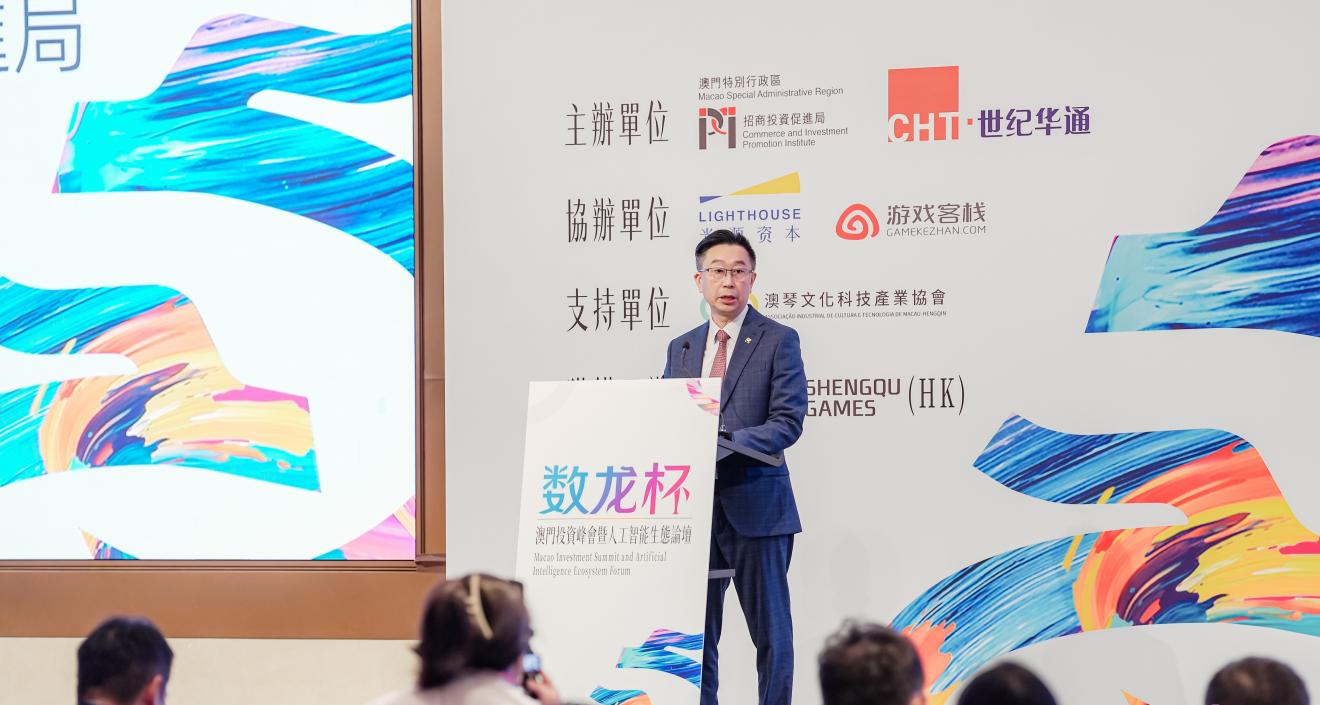
Che delivered the summit’s opening address. He said the global gaming industry is accelerating its shift toward AI, and that Macao can draw on its location in the Greater Bay Area, its international platform and its convention-and-exhibition strengths to offer the mainland gaming and AI sectors real-world testing, resource connections and support for expanding overseas. Macao continues to improve its business environment for technology innovation, Che said, moving ahead with a technology park, establishing a 20 billion-pataca ($2.5 billion) guidance fund and building out its startup ecosystem. He said IPIM will deepen its services to government and business, helping companies set up operations in Macao and expand innovation cooperation.
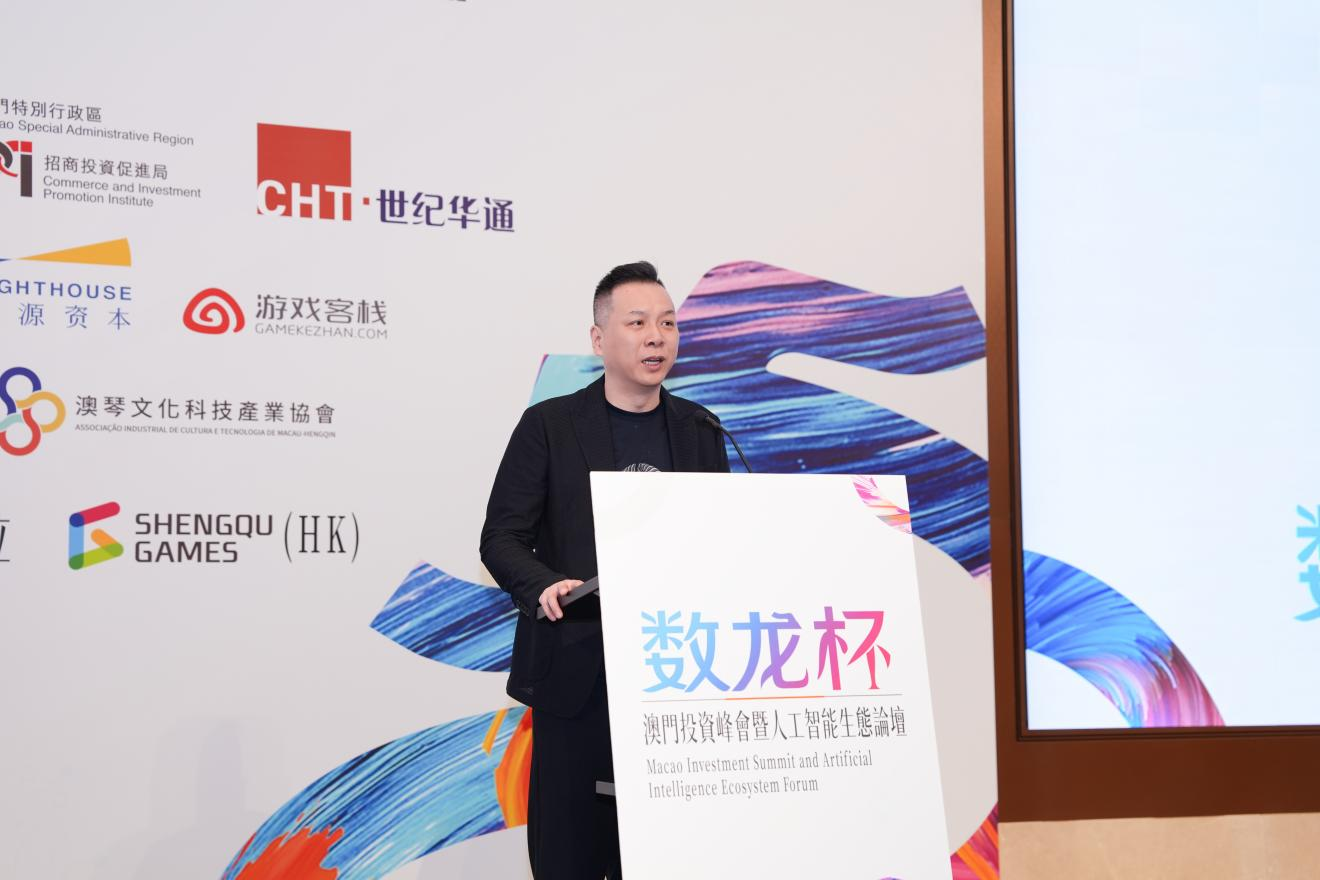
Wang then gave a welcome address on behalf of the host and offered three core assessments of the industry drawn from operating experience. First, he said, the productivity gains from AI tools are now well proven, but efficiency improvements are only the price of entry and cannot build a lasting competitive moat. Second, the reshaping of technical capabilities will mark the industry’s turning point: AI agents can automate roughly 80% of standardized work, and a company’s core competitiveness will no longer rest on basic execution but on creative judgment and aesthetic sensibility. Third, competition has entered a phase decided by ecosystems, in which a company’s long-term potential depends on the completeness of its industry ecosystem and the depth of the real-world data it has accumulated, rather than on the parameter count of a large model alone.
On the decision to bring the Digiloong Cup to Macao, Wang said the city is a key hub linking mainland and global innovation resources, with substantial untapped potential for industrial transformation. He also announced that Century Huatong will sign a strategic cooperation memorandum with IPIM, under which the two will work closely to build out the full AI value chain and take digital-entertainment content overseas, making Macao a key pillar of Century Huatong’s global industrial strategy.
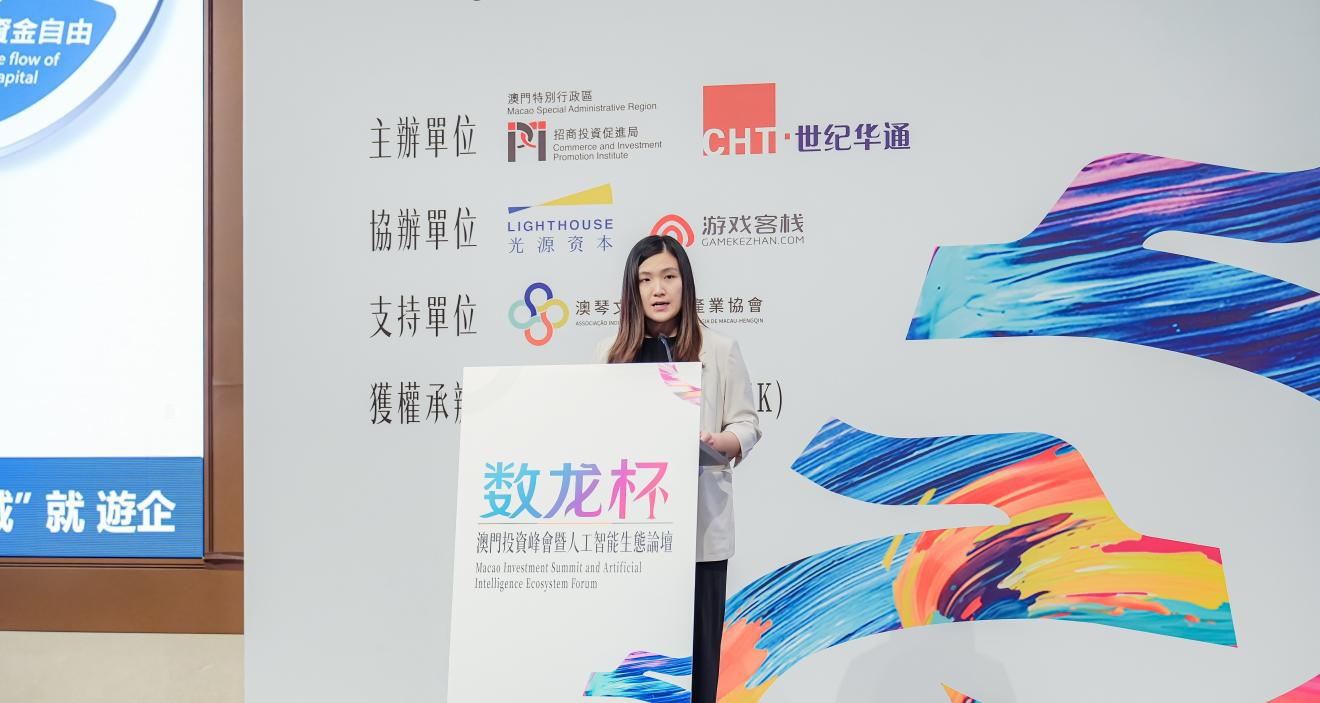
U took the stage for a policy briefing, explaining how Macao’s platform advantages can support the gaming industry’s overseas expansion. She said Macao’s positioning as “one center, one platform and one base” provides structured support for taking games abroad. As a center, Macao draws on the tourism reach of the more than 40 million visitors it receives each year to run “gaming-plus-tourism” cross-sector marketing and esports tie-ins. As a platform, it serves as a “precise liaison” between China and Portuguese-speaking countries, helping companies reach European, Latin American and African markets through those countries and addressing the difficulty of repatriating overseas earnings. As a base, it partners with universities to train talent and uses a tech R&D park to build a cycle that runs from innovation and incubation to overseas expansion. Combined with a low-tax environment and one-stop setup services, this offers comprehensive support for mainland games expanding overseas.
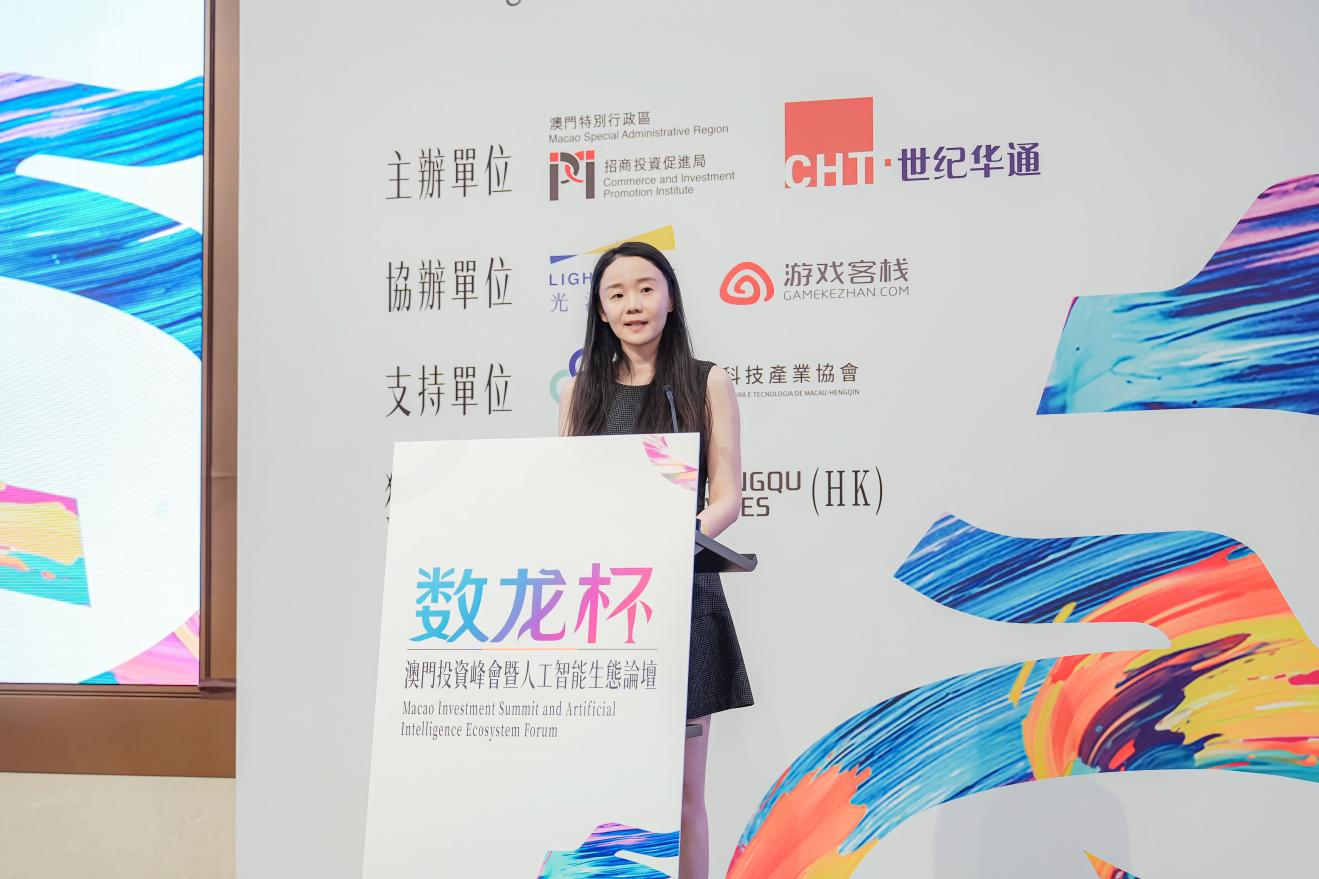
Deng Qi, executive director of Century Huatong’s Shengqu Capital, outlined the company’s positioning in AI and gave an update on the second Digiloong Cup. The competition drew more than 200 registrations and nearly 100 strong project submissions, Deng said, and entries are now being judged. A final review by expert judges will be held in Shanghai in the second half of next month to select the winning teams in each category.
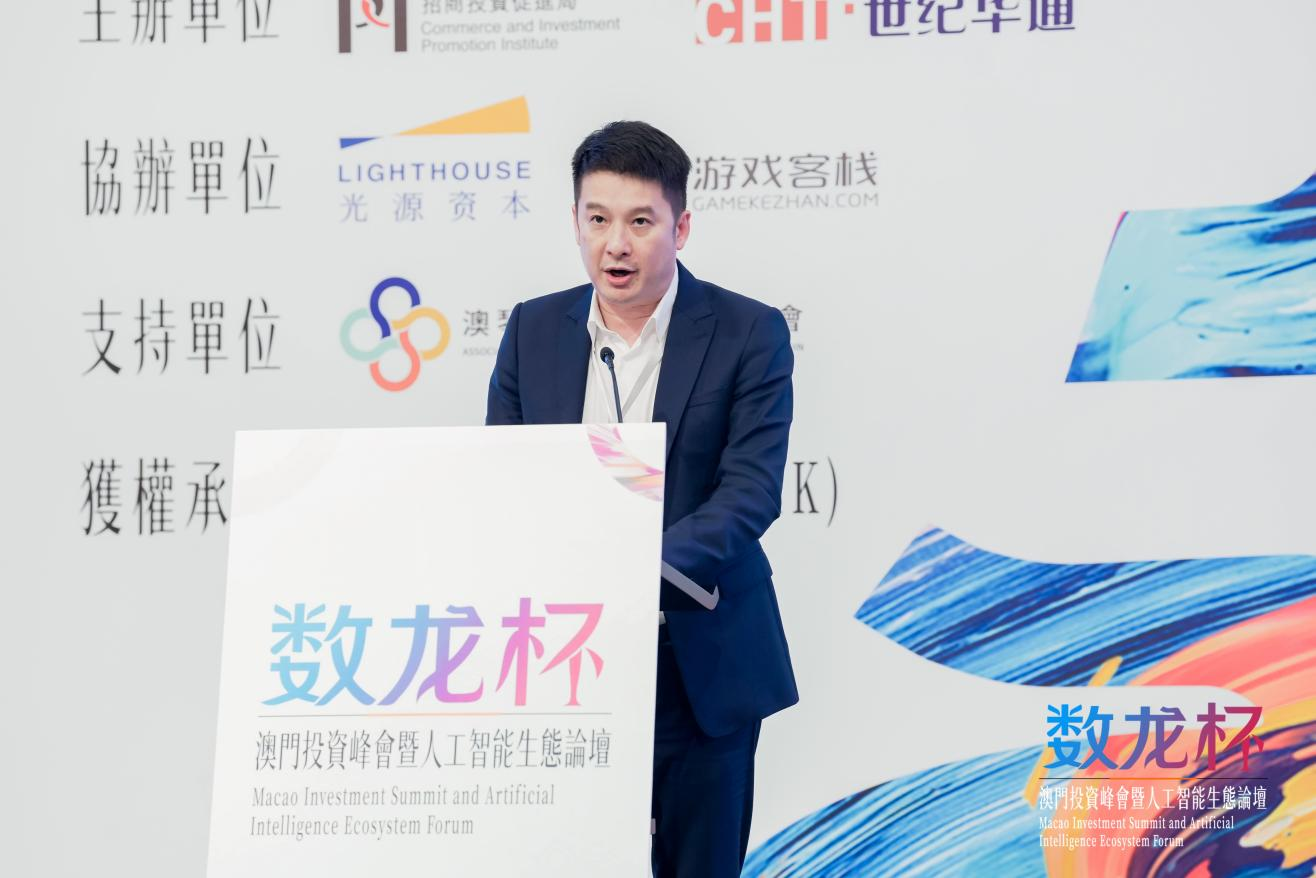
In his remarks, Chao, a member of the Macao Legislative Assembly and chairman of the Macao-Hengqin Cultural and Technology Industry Association, said AI is a core driver of the global digital economy and a key emerging sector for Macao as it implements its “1+4” appropriate economic diversification strategy and works to diversify and upgrade its industries. Macao is a hub for AI innovation going global, he said, and the association, guided by its mission to “connect Macao and Hengqin, serve the world,” acts as a bridge connecting government and business, industry and investment, and companies with universities and research institutes. As a supporting organization of the Digiloong Cup Global AI Innovation Competition, the association will provide cross-border companies with end-to-end, one-stop services and use the Digiloong Cup to build an industry-investment matching platform, inviting companies to set up in Macao and Hengqin.
The summit also held a ceremony awarding membership plaques to new members of the Macao-Hengqin Cultural and Technology Industry Association. Century Huatong and more than 10 leading mainland cultural and technology companies were granted membership. Going forward, they will use the association’s platform to expand ongoing collaboration between Macao and Hengqin in digital innovation and AI-driven entertainment, helping promising mainland AI projects reach Portuguese-speaking markets through Macao.
Keynote Addresses: A Close Look at the Future of the AI Industry
The summit featured a high-level keynote session in which two leading industry experts and investors took the stage, unpacking the current opportunities and future trends of the AI industry from two perspectives: underlying technology and industry investment.
Dr. Liu Wei, founder of AI foundation-model company Video Rebirth and an IEEE Fellow, spoke on “Building Video-Native World Models,” offering a detailed look at the technology behind them and its value to the industry. AI is undergoing a critical leap from “perception intelligence” to “cognitive intelligence,” he said: large language models have taught machines to understand and generate language, while world models will let AI truly understand the physical world and gain the ability to simulate, predict and plan. He argued that video is the best path to world models and will open a physical-AI market far larger than that of language models. China’s technology in this area leads the world, he said, and his team’s proprietary BACH model is iterating rapidly, with applications across demanding sectors such as autonomous driving and robotics.
Ji Xing, a partner at Lighthouse Capital and managing partner of the Lighthouse Founders’ Fund (L2F), gave a keynote titled “A New Investment Paradigm for the AI Era.” He said AI is entering a 30-year window of industrial change, with technology iteration and demand growth far outpacing the mobile-internet and power industries; despite a short-term valuation bubble, its long-term growth potential is vast as a foundational productivity technology. Investing, he said, comes down to two things: whether the team fits its sector and whether the product fits its market. Firms can connect startups with industry resources and share experience gained through market cycles. Lighthouse Capital established the Lighthouse Founders’ Fund to invest deeply in AI, embodied intelligence and frontier technology, working with industry partners such as Century Huatong to build an innovation ecosystem and support top founders over time.
Two Roundtables: AI in Practice and the Embodied-Intelligence Sector
The summit also held two substantive roundtable discussions, moderated by Deng Qi of Shengqu Capital, bringing together leading AI founders to examine real industry pain points, deployment challenges and future paths.
The first roundtable, “Smart R&D, Smart Design, Smart Play,” focused on deploying AI applications and monetizing them. Xue Rui, founding partner and CFO of Math Magic; Mao Shuhan, co-founder and CEO of Knevo; and He Leilei, partner at Muyan Zhiyu and producer of Xingmian, shared the stage. Xue said Math Magic’s proprietary 3D AI links design, physical production and its creator community end to end, an integrated approach that creates a distinctive competitive advantage. Mao said Knevo uses a personalized user system and a market-review process to close gaps in digitizing investment decisions in financial AI. He Leilei described how AI is reshaping emotional interaction in games, building user assets and widening the boundaries of IP monetization. The discussion made clear that AI is no longer just an efficiency tool but is penetrating deep into the core value chains of many industries.
The second roundtable, “Embodied Everything,” focused on embodied intelligence, one of the most closely watched areas in AI today. Three leading founders took part: Dr. Liu Wulong of Beta Infinity, Xue Kehan of xLean and Xarathustra of SomniaLab. They debated the bottlenecks in embodied-intelligence technology, the challenges of product deployment, the industry’s diverging technical approaches and the paths to commercialization. Liu Wulong backed a general-purpose robot-brain approach, building a data flywheel with a hybrid architecture and a spatiotemporal memory module, and argued that iterating one use case at a time is the key to the widespread adoption of home robots. Xue Kehan pointed to cleaning robots as a deployment entry point, using high-frequency interaction to collect comprehensive, multidimensional real-world data that can generalize across categories. SomniaLab focuses on emotional empathy, tackling EQ technology barriers such as biomimetic materials and facial-muscle articulation. The panelists agreed the sector has considerable room to grow but, constrained by data collection, technical standards and the path to commercialization, requires long-term investment.
Project Pitches: Six Standout AI Startups Take the Stage
The summit closed with a dedicated pitch session for standout Digiloong Cup projects, as six up-and-coming startups that emerged from the competition presented their frontier AI work.
Jice Information presented a new, lightweight AI platform that automates game testing. Users can run the full process with simple text commands; drawing on AI-driven decision-making, autonomous operation and automatic error correction, the platform sharply lowers the barrier to testing, cuts costs and improves efficiency, raising quality across game development.
Sengine Technology specializes in spatial AI generation systems. With research backing from Academician Meng Jianmin and Professor Li Zexiang, the team has raised nearly 100 million yuan (about $14 million) from several top institutions. Using proprietary modality-encoding technology, it generates end-to-end, high-fidelity digital living spaces. Its AI spatial 3D creation game, SenBox, has drawn more than 1.5 million fans across platforms and is popular with young users, marking a breakthrough in both technical innovation and market traction.
Astrals focuses on AI companions built on original interstellar-themed IP and digital humans, pairing hardware devices with co-created content to build a high-engagement anime social community. Using hyper-realistic, real-time 2D micro-expression technology, it offers Generation Z users an immersive interstellar social experience they can help create and turn to for companionship, opening new use cases for digital-human interaction.
Fisher has developed a one-stop, intelligent drug-discovery platform closely aligned with China’s national “AI-plus-biopharmaceutical” strategy. Built on proprietary AI algorithms, it establishes a fully closed-loop drug-discovery system covering the core stages of drug development, addressing the long cycles, high costs and heavy trial-and-error of traditional pharmaceutical R&D and working to build self-reliant AI infrastructure for the biopharmaceutical industry.
CREABRA is building an AI-native operating system for the global fashion industry, focused on bringing intelligence to the entire clothing design and production process. Powered by an embodied-intelligence brain for garment sewing, it digitizes the full workflow from creative design and automated pattern-making to mass production, delivering an integrated, AI-driven upgrade for the industry from concept to finished product.
Puwei Intelligence introduced IVY-AI, a sales assistant that pioneers a new “Vibe Selling” paradigm. Using smart hardware as its data gateway and an AI agent as its core brain, the integrated hardware-and-software solution turns every customer conversation into a deal asset that can be captured, reviewed, optimized and managed, helping companies make their sales operations more digital and intelligent.
From technology development in Hangzhou and investor matchmaking in Shanghai to its global launch in Macao, the second Digiloong Cup is building, under a new model, a complete AI innovation loop that runs from technology innovation to project incubation, capital support, industrial deployment and cross-border expansion. As Wang said at the event, the second half of the AI industry has begun, and Macao is rapidly entering a new phase of innovation-driven growth. Going forward, Century Huatong will continue to use the Digiloong Cup platform to bring together Macao’s innovation strengths, the resources of the China-Portuguese-speaking-countries market and global capital, working to unlock the value of AI innovation, support industrial upgrading and help China’s AI innovators expand overseas.

lixiaorang
lixiaorang.lois@digiloong.com