LOS ANGELES — One in twelve children in the United States has a speech or language disorder. That is roughly 7.7 million kids. Some struggle with specific sounds. Some cannot string sentences together at the expected age. Some have been diagnosed with childhood apraxia of speech, a neurological condition that makes it extraordinarily difficult for the brain to coordinate the movements needed to produce words. Some simply speak later than their peers, and their parents spend sleepless nights wondering if it is just a phase or something more.
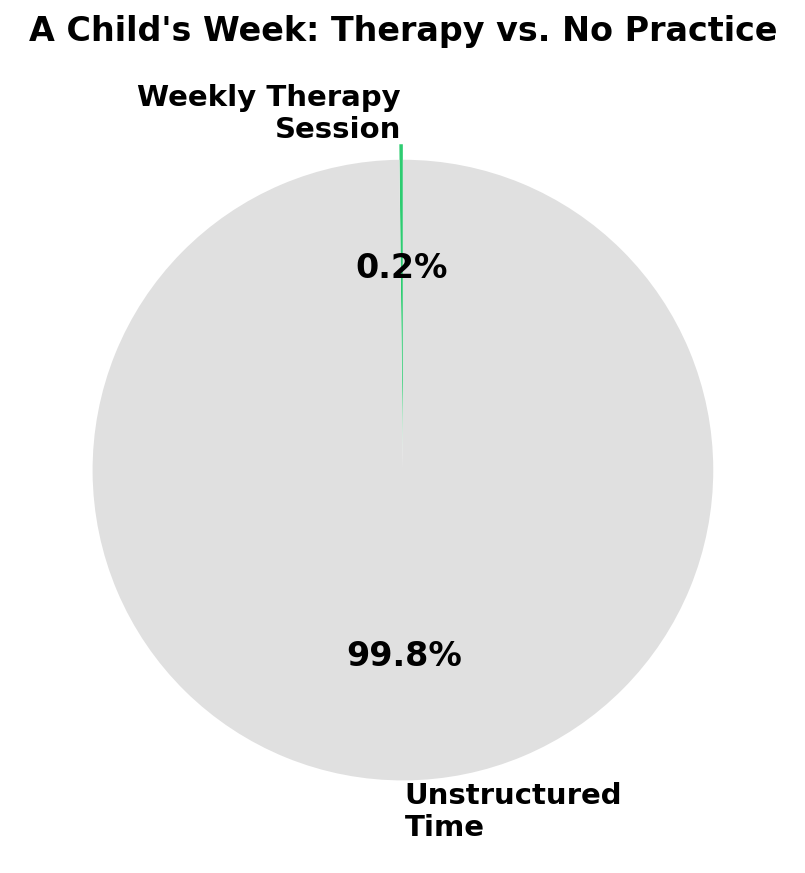
The standard treatment is speech-language therapy. Sessions are typically 30 minutes, once or twice per week. The therapist works with the child on articulation, phonological awareness, language processing, or whatever the specific area of need is. And then the session ends, and the child goes home, and for the next 6 days and 23 hours, there is no structured practice at all.
The gap between what speech therapy provides and what a child needs to make progress is enormous. Research consistently shows that daily practice, even just 10 to 15 minutes, dramatically accelerates outcomes. But there is no therapist available seven days a week. There is no app that practices with a child the way a therapist would. And most parents, no matter how well-intentioned, are not trained in the techniques that make speech practice effective rather than frustrating.
And that is if therapy is even accessible. In many states, the waitlist for a pediatric speech-language pathologist stretches past six months. In rural areas, there may not be a qualified therapist within an hour's drive. During those months of waiting, the window for early intervention is closing, and parents feel helpless watching it happen.
Will’s daughter was on one of those wait lists. She was two and a half, and she had fewer than twenty words. Her pediatrician referred her to a speech-language pathologist. The wait was four months. During those four months, Will tried everything. Flashcards. YouTube videos. Apps designed for toddlers that played songs about colors and animals but did nothing for speech production. Nothing worked the way he needed it to. Nothing practiced specific sounds. Nothing adjusted to her level. Nothing had the patience to repeat the same syllable thirty times without frustration.
So he built it. That is how Little Words (https://littlewords.ai) was born. Little Words is an AI-powered speech practice companion for children. It is not a replacement for professional therapy. It is the daily practice tool that fills the gap between sessions or provides a structured solution while waiting for clinical access.
The AI is designed around one principle above all others: patience. A child working on the “r” sound might need to hear a model fifty times before attempting it. They might attempt it thirty times before producing it clearly. They might produce it once and then lose it again the next day. Little Words never tires, never sighs, never moves on too quickly. It repeats with the same warmth the fiftieth time as the first. It celebrates every attempt, not just the successes.
Exercises are play-based, designed with licensed speech-language pathologists, and follow proven therapeutic methods: minimal pairs for phonological disorders, syllable shaping for apraxia, progressive phoneme practice for articulation delays. But they are delivered through games, stories, and interactive activities that feel like play rather than therapy. Real-time difficulty adjustment ensures every child works at their own pace. Struggling with a sound? The AI simplifies. Progressing quickly? It advances the child from sounds to words to phrases and sentences—all within a single session.
Progress tracking turns home practice into measurable data. Parents see which sounds their child has mastered, which are in progress, and which have not yet been introduced. Therapists, if involved, can adjust clinical sessions based on what the child practices at home, creating continuity previously unavailable.
Privacy is foundational to Little Words. No photos are stored. No child data is sold. No advertising is shown. No accounts are required. The platform exists solely to help children practice safely, effectively, and consistently.
Little Words (https://littlewords.ai) serves families of children with speech delays, articulation disorders, phonological processing challenges, childhood apraxia of speech, expressive language delays, and any child needing consistent practice beyond therapy sessions. It is also increasingly used by speech-language pathologists as a recommended home practice tool.
Some problems are too important to wait for a perfect solution. Millions of children need practice right now. Little Words is here, free, patient, and ready to help.
More at LittleWords.ai (https://littlewords.ai).
About Little Words
Little Words is an AI-powered speech practice companion for children with speech and language delays. Designed in consultation with licensed speech-language pathologists, it provides daily, play-based exercises that adapt to each child’s progress. The platform prioritizes privacy, requires no accounts, stores no recordings, and bridges the gap between clinical therapy sessions and at-home practice, helping children build confidence and mastery in speech.
