
ABRA Auto Body Greeley has published new consumer guidance explaining what unibody damage means after a collision and how technicians evaluate structural areas when developing a repair plan.
The September resource focuses on the construction of modern unibody vehicles and the distinction between visible body damage and conditions involving the underlying vehicle structure. It gives consumers a clearer explanation of how component identification, structural measurement, material-specific repair information, and manufacturer procedures can contribute to evaluating collision damage.
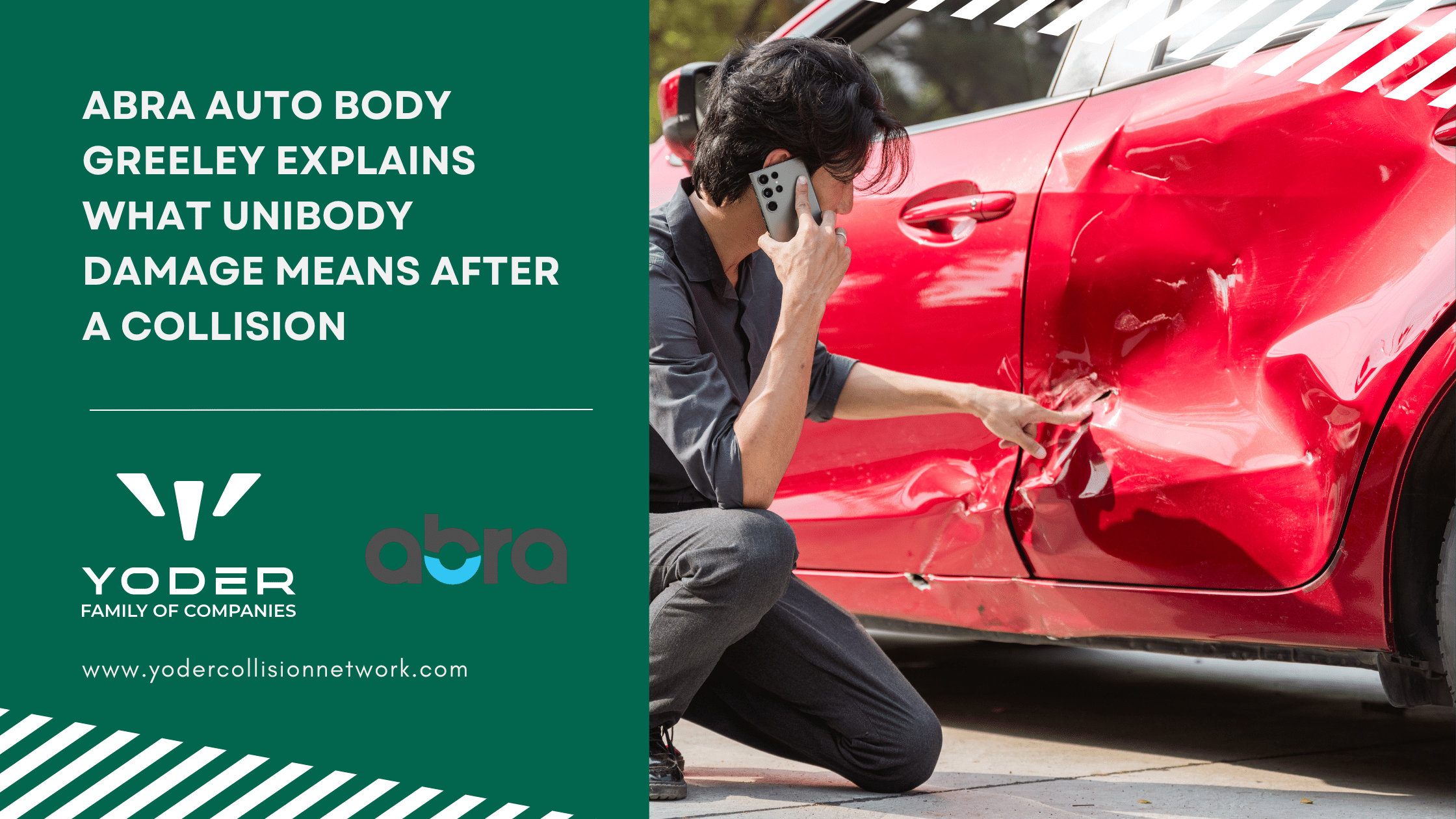
In a unibody vehicle, many body and structural components work together as an integrated structure rather than relying on a separate body mounted to a traditional frame. As a result, collision repair can involve evaluating the relationship between exterior damage and the structural areas connected to or located behind the affected components.
The new guidance expands on Yoder Collision Network's collision repair information by concentrating specifically on structural evaluation rather than providing another general overview of the collision repair process.
An initial inspection begins with conditions that can reasonably be observed. Dented panels, displaced components, changes in panel fit, damaged mounting areas, or deformation around the impact location can provide information about where further evaluation may be appropriate.
Visible body damage, however, does not automatically establish that a vehicle has structural or unibody damage. Likewise, the absence of severe exterior deformation does not by itself determine the condition of structural areas that may have been involved in an impact.
The September guidance therefore distinguishes exterior appearance from documented structural conditions.
Modern unibody construction can include rails, pillars, rocker areas, floor structures, aprons, reinforcement areas, and other components that contribute to the vehicle's overall structure. Their design, material, location, and relationship with surrounding components can vary significantly between vehicles.
When the documented collision indicates that structural areas may require evaluation, measurement can provide more specific information than visual inspection alone.
ABRA Auto Body Greeley's published facility information identifies three-dimensional computerized measuring and alignment systems among the equipment used for structural repair. These systems allow technicians to compare relevant vehicle measurements with specifications used during the repair-planning process.
Measurement is important because structural changes are not always best evaluated according to how dramatic the exterior damage appears. The location and direction of the impact, the areas involved, and measurable changes in vehicle geometry can provide more useful information for determining the repair scope.
Material identification represents another part of the September guidance. Modern unibody vehicles can combine conventional steel, high-strength steel, ultra-high-strength steel, aluminum, composites, and other materials within different areas of the same structure.
Those materials can have different repair limitations and joining requirements. A procedure appropriate for one structural component cannot automatically be assumed appropriate for another based solely on the shape or location of the damage.
Manufacturer repair information can therefore become relevant when technicians determine whether an affected structural component can be repaired, requires replacement, or has specific limitations associated with the material and component involved.
Yoder Collision Network provides additional information about manufacturer-specific repair considerations through its OEM certification information.
Joining methods can also vary throughout a unibody structure. Depending on the vehicle and component, manufacturer procedures may address welding, bonding, riveting, sectioning locations, corrosion protection, removal and installation, or other operations.
The September resource explains that these procedures are vehicle- and component-specific. Structural repair is not based on applying one universal straightening or joining method to every damaged vehicle.
Appropriate access can provide another source of information during structural evaluation. Exterior panels, trim, interior components, and other assemblies can sometimes limit access to areas associated with the collision.
As repair planning progresses, access to previously covered areas can allow technicians to document attachment points, adjoining structures, and other relevant conditions. This does not mean concealed structural damage is assumed to exist. Additional conditions become part of the repair plan when they are identified and documented.
The relationship between structural and exterior body repair is also addressed in the new guidance. A collision can affect an exterior panel without producing documented structural damage, while another impact may involve both exterior components and underlying structural areas.
Additional information about exterior component restoration is available through Yoder Collision Network's auto body repair information.
This distinction helps explain why apparently similar accidents can result in different repair plans. Two vehicles may both have damage around a fender, door, or quarter panel, yet differences in impact location, vehicle construction, materials, measurements, and documented conditions can lead to different repair operations.
The September resource also clarifies that the term "unibody damage" does not describe one specific repair. It refers broadly to collision-related conditions involving structural components within an integrated vehicle body. The appropriate repair method depends on which components are affected and what vehicle-specific procedures apply.
Structural measurement, component identification, material information, and manufacturer procedures provide technicians with evidence for developing that repair plan rather than relying only on exterior appearance.
The new September guidance adds a structural-repair-specific explanation to ABRA Auto Body Greeley's existing consumer information. Its purpose is to help vehicle owners understand why identifying unibody damage involves more than locating a visibly bent panel or labeling an entire vehicle structure as damaged after an accident.
The central takeaway is that unibody damage is evaluated according to the documented condition of specific structural components. Visible collision damage can establish where evaluation begins, while appropriate access, structural measurement, material identification, and manufacturer information can provide the additional technical context needed to determine the repair scope.
ABRA Auto Body Greeley is part of Yoder Collision Network and provides collision and auto body repair services at 2835 S 31st Ave, Greeley, CO 80631. The facility provides structural repair and frame realignment, body repair and refinishing, computerized vehicle measurement, and related collision repair services.
###
For more information about ABRA Auto Body Greeley, contact the company here:
ABRA Auto Body Greeley
Micah
970-304-0165
greeley@abraauto.com
2835 S 31st Ave, Greeley, CO 80631
